
JIC chief rejects Hun Sen’s modern warfare claim against Thailand
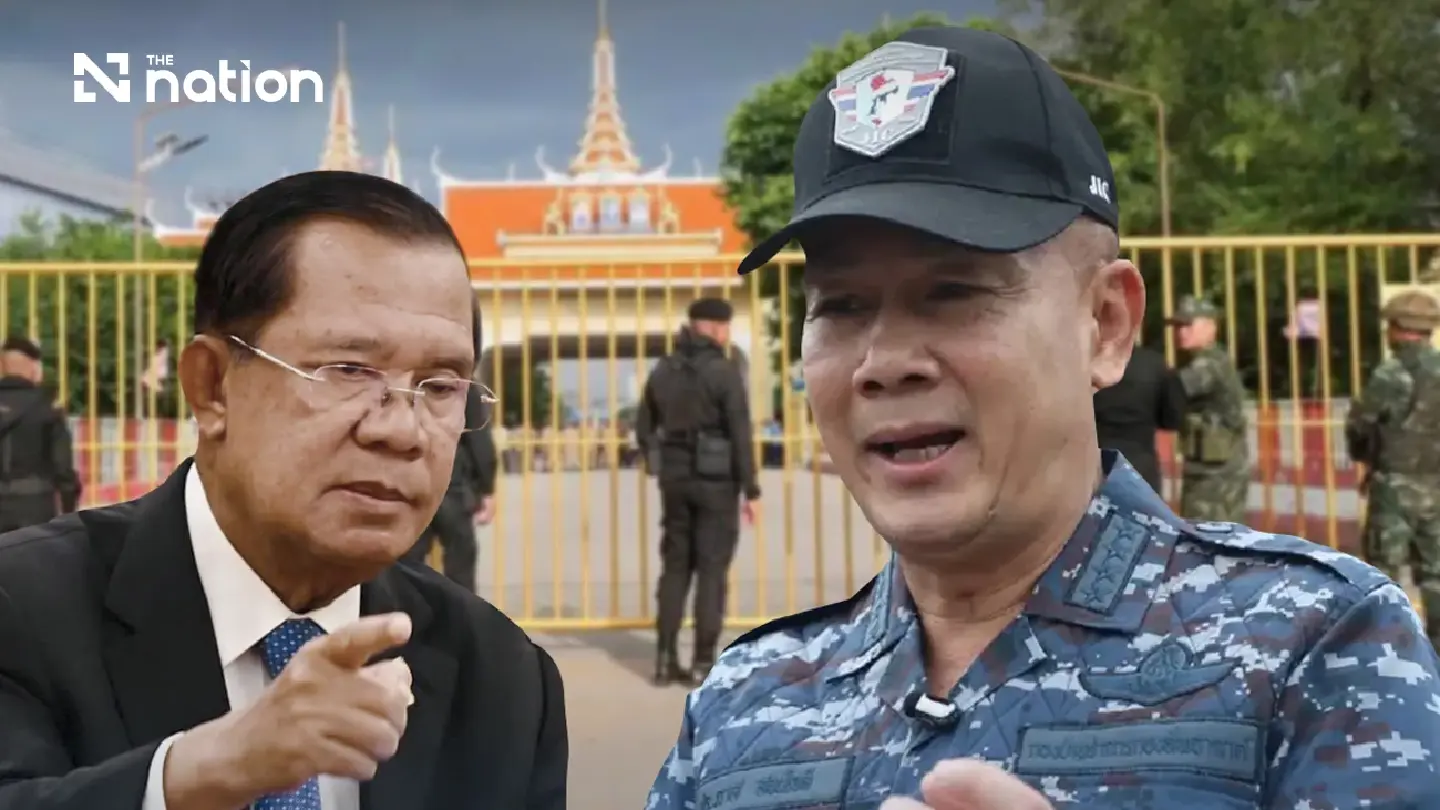


Thailand’s JIC rejects Hun Sen’s modern-warfare claim, urging scrutiny of the first use of force, military use of sites and ceasefire facts.
- Thailand's Joint Information Centre (JIC) chief, Prapas Sonjaidee, rejected Cambodian Senate President Hun Sen’s allegation that Thailand used a crackdown on online crime as a pretext for "modern warfare" and occupying Cambodian territory.
- Prapas argued that the crackdown on scam operations is a separate issue from military conflict and that any discussion of war must begin with the "first shot," claiming Thailand has evidence that Cambodia initiated the hostilities.
- He refuted the occupation claim by citing a ceasefire agreement where both sides agreed to hold their positions, stating that maintaining these positions cannot be redefined as occupation.
- The JIC chief urged both sides to cease trading accusations on international platforms and instead use established mechanisms to examine evidence regarding the conflict's timeline and border disputes.
ACM Prapas Sonjaidee, Director of the Joint Information Centre on the Thailand - Cambodia Situation (JIC), on Friday (August 28) rejected Cambodian Senate President Hun Sen’s allegation that Thailand had used its crackdown on online crime as a pretext to occupy Cambodian territory.
Hun Sen had raised the accusation at an international forum, characterising Thailand’s actions as a form of “modern warfare”.
Prapas described the allegation as serious and argued that claims made on an international stage should be based on facts that can be independently examined.
He maintained that Thailand had not used the problem of scam operations as an excuse to seize another country’s territory, stressing that two separate issues needed to be distinguished: whether a location was associated with scam operations and whether that location was being used for military purposes.
If a building or an area was being used to station troops, store military equipment or support military operations, he argued, the actual use of that site would need to be assessed under the relevant law.
“Therefore, do not change the question from what that location was being used for during the fighting to whether Thailand attacked it because it was a scammer site. These are two different questions. If we are going to talk about war, we must start with the first shot, not the day Thailand responded,” Prapas stated.
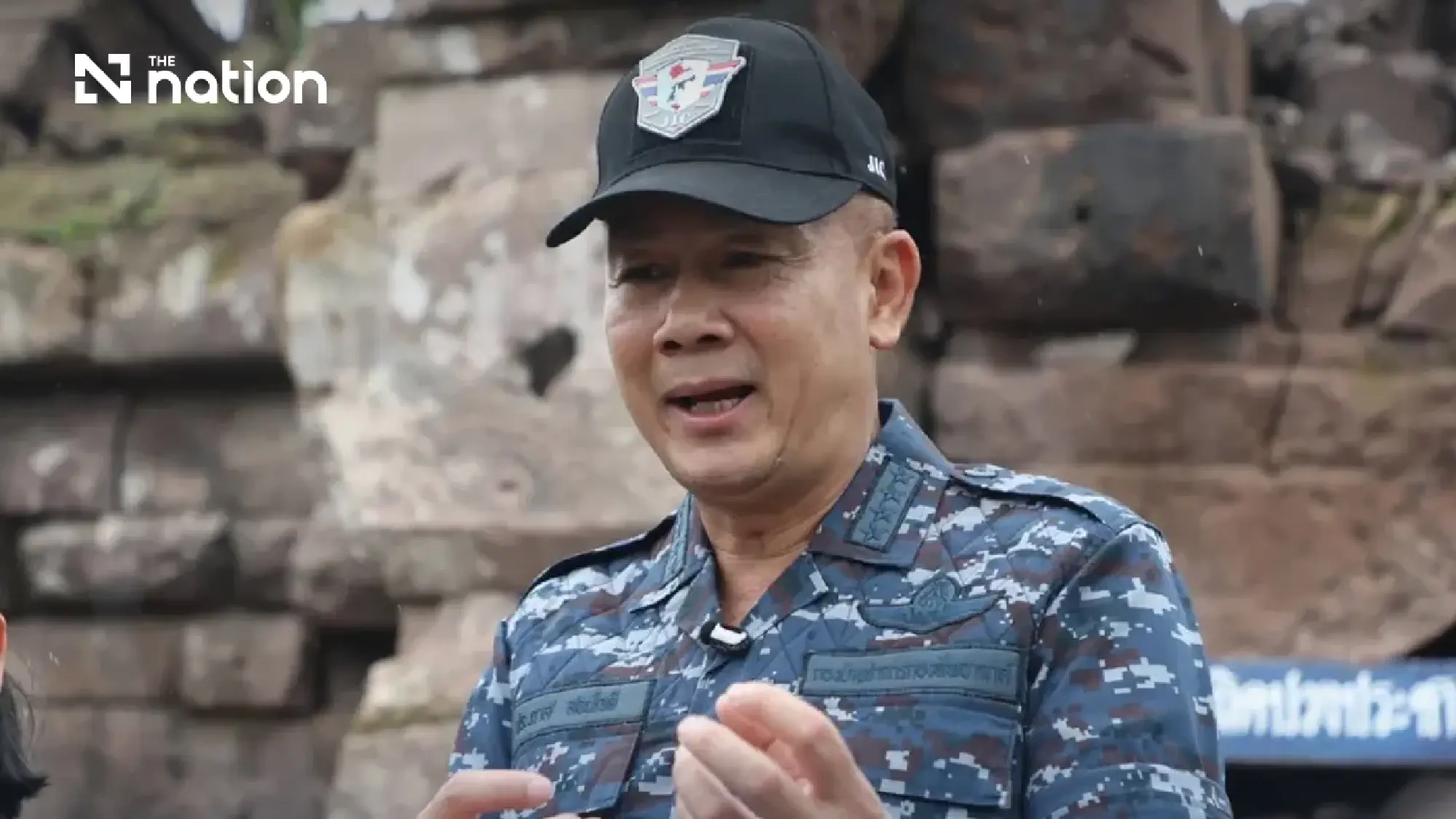
Addressing Hun Sen’s assertion that the border conflict had resulted in Cambodian territory being occupied, the JIC director stressed that the sequence of events was crucial when examining a war or armed clash.
An account of the conflict, he argued, should not begin only on the day one side responded to earlier action.
“According to Thailand’s information and evidence, Cambodia was the first side to use weapons, and weapons were used in a way that affected civilian areas in Thailand,” he maintained.
Prapas characterised Thailand’s response as an effort to stop threats and protect the lives of Thai military personnel and civilians.
If Cambodia disputes Thailand’s account, he argued, the appropriate response would not be to trade accusations on international platforms. Instead, both sides should systematically examine their respective evidence, including dates, times, coordinates and the sequence of events.
“Facts should be open to scrutiny. Maintaining forces in accordance with a ceasefire agreement should not be redefined as occupation,” he noted.
Asked about Hun Sen’s insistence that Thailand was occupying Cambodian territory, Prapas pointed to the joint statement agreed upon by the two countries.
Under the principles governing the situation following the ceasefire, forces were to remain at the positions specified when the ceasefire took effect, refrain from moving towards each other, avoid escalating tensions and reduce provocative actions. Prapas also stressed that the positioning of troops did not determine the demarcation of the border.
“We therefore should not do two things at the same time: on the one hand, sign an agreement requiring forces to remain in place while, on the other, describing the other side’s maintenance of those positions as occupation,” he argued.
“If there are differences over where the border lies, the border mechanisms should do their work. The military should not draw the border. The media should not draw the border, and a unilateral speech cannot draw the border. This issue must return to the mechanisms accepted by both countries.”
Turning to civilian casualties, Prapas strongly endorsed the principle that civilians must be protected, stressing that it must apply equally to people on both sides of the border.
Thai and Cambodian children must both be protected, he emphasised, while schools in both countries must remain safe because humanitarian principles have no nationality.
“If we are going to discuss harm to civilians, we must examine the damage on both sides, including the types of weapons, directions of fire, coordinates, times and targets,” he explained.
“Another equally important principle is that civilian locations must not be used to support military operations in a way that places civilians at risk. This is a standard that all sides should accept. Information warfare is real. The way to fight it is to reveal the evidence, not to increase propaganda.”
Asked about Hun Sen’s references to information and psychological warfare allegedly being used to damage Cambodia’s reputation, Prapas acknowledged that information warfare and disinformation were challenges of the 21st century.
However, he contended that the best response was not to create another set of accusations.
“The best approach is to make the information, evidence and chronology public and allow them to be scrutinised,” he stressed. “If we accuse the other side of conducting information warfare while at the same time presenting only information that supports our own narrative, we will never escape the cycle of information warfare.”
On Thailand’s objectives, Prapas maintained that Thailand did not want war, did not want the territory of a neighbouring country and did not regard the Cambodian people as enemies. At the same time, Thailand had a responsibility to protect its civilians and military personnel.
“On scammers, let us work together to suppress them. On the use of locations for military purposes, let the facts and the law determine the issue. On the clashes, disclose the entire chronology instead of beginning the story only on the day Thailand responded,” he stated.
“On the border, let the border mechanisms work. And on the ceasefire, both sides should uphold the joint statement, maintain their forces as agreed, reduce provocations and create an atmosphere in which negotiations can move forward.”
Prapas concluded that if there was genuine concern that warfare in the 21st century was damaging societies, the answer was not to open another battlefield of competing narratives.
Instead, he argued, the priority should be to silence the guns, make the facts clearer and restore negotiations, describing those as the outcomes sought by people in both Thailand and Cambodia.
“If we are going to talk about war, we must start with the first shot, not the day Thailand responded. If we are going to talk about scammers, we must distinguish between transnational crime and the use of a location for military purposes.”
