
Twenty dead-standing sandalwood trees chosen for royal rites
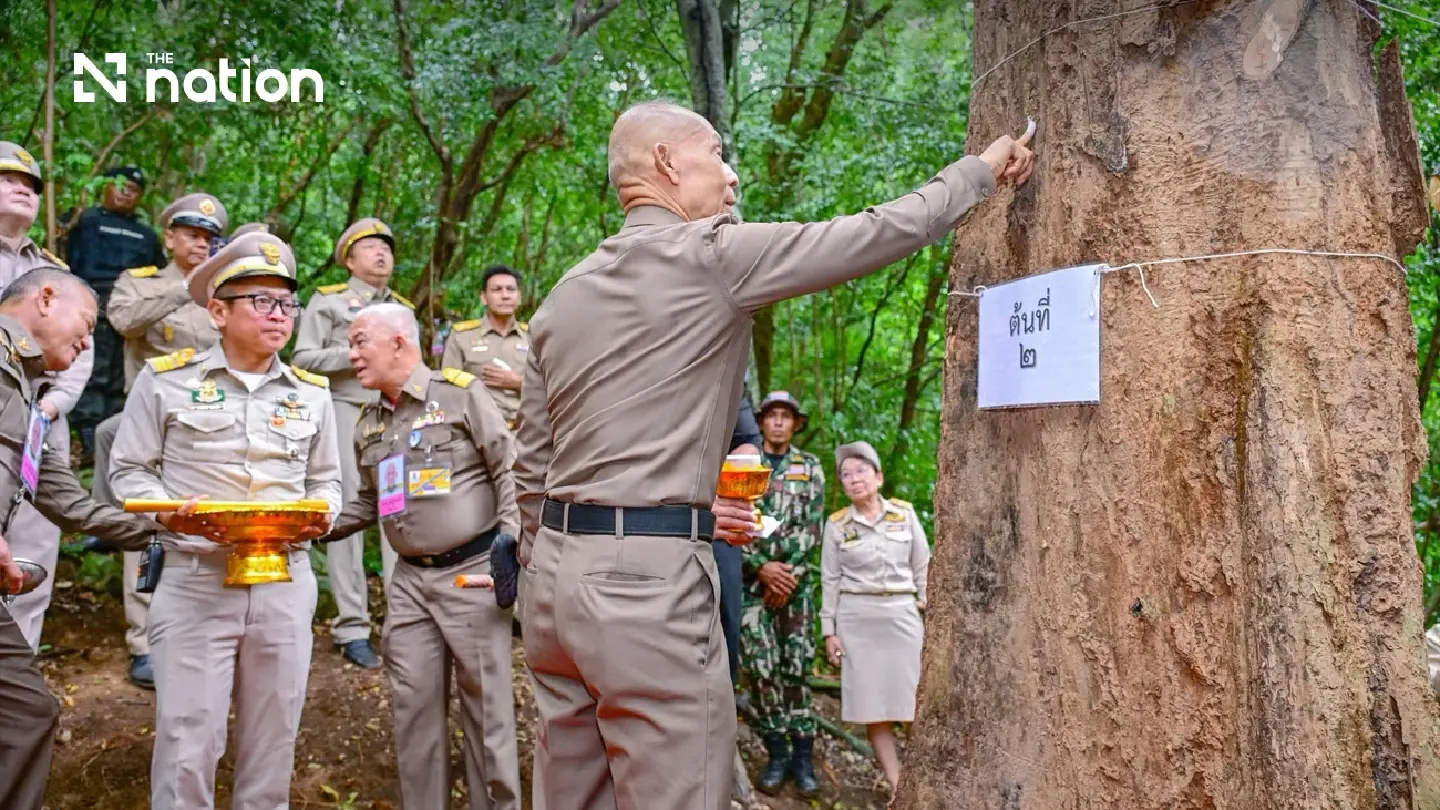


Twenty naturally dead sandalwood trees from Kui Buri National Park will be used in Princess Bajrakitiyabha’s royal funeral, with 200 replanted
- Twenty naturally dead-standing, fragrant sandalwood trees have been selected from Kui Buri National Park for the royal funeral rites of Princess Bajrakitiyabha.
- The chosen trees, all over 100 years old, were selected because their dense, fragrant wood meets the specific requirements of ancient royal tradition.
- A formal ceremony, attended by high-ranking officials and presided over by a Grand Chamberlain, was held to initiate the harvesting of the trees.
- The harvested wood will be processed and delivered to the Office of Traditional Arts to be used in crafting items for the Princess's funeral.
Twenty naturally dead fragrant sandalwood trees have been selected from Kui Buri National Park in Prachuap Khiri Khan for use in the royal funeral rites of Her Royal Highness Princess Bajrakitiyabha Narendiradebyavati Kromluangrajasarinisiribajra Mahavajrarajadhita.
A ceremonial rite to begin harvesting the dead-standing trees was held at the national park on Thursday (August 20, 2026).
Deputy Prime Minister and Commerce Minister Suphajee Suthumpun and Natural Resources and Environment Minister Suchart Chomklin attended the ceremony during an official visit to Prachuap Khiri Khan.
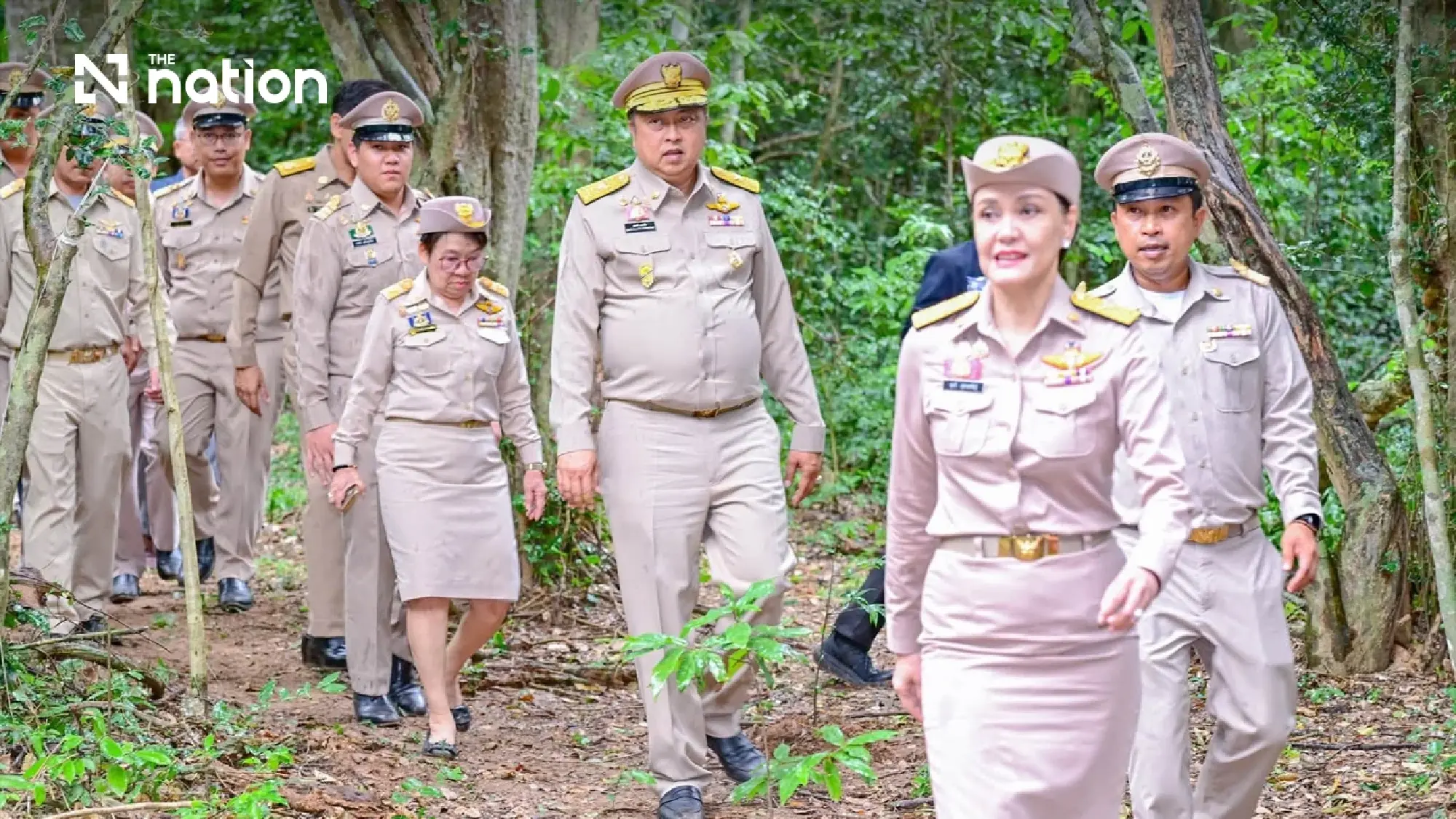
ACM Somkid Sukbang, Grand Chamberlain attached to Her Royal Highness, presided over the proceedings.
The directors-general of the Department of National Parks, Wildlife and Plant Conservation and the Fine Arts Department also attended, alongside senior officials, civil servants and members of the public.
Trees meet royal ceremonial requirements
The Department of National Parks, Wildlife and Plant Conservation surveyed the forest and selected 20 fragrant sandalwood trees that had died naturally while still standing.
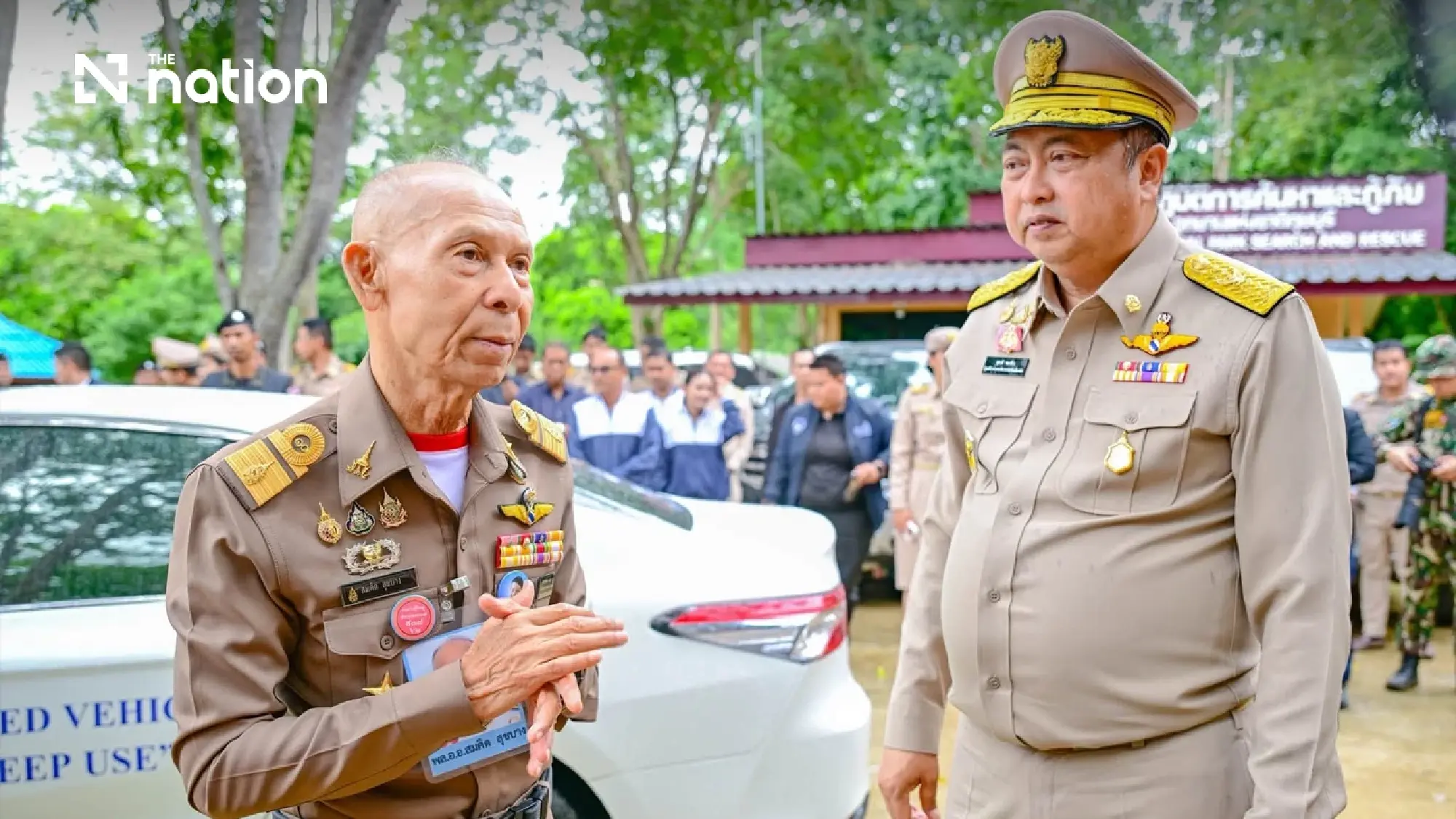
Kui Buri National Park covers about 969 square kilometres and contains moist evergreen, dry evergreen and mixed deciduous forests.
The selected trees were more than 100 years old and had an average circumference of 150cm. Their dense, yellowish-brown wood and strong fragrance met the requirements of ancient royal tradition.
At 11.09am, Somkid poured sacred lustral water and anointed a sandalwood tree and the ceremonial golden axe before making the first cut.
A royal astrologer struck a victory gong as conch shells, trumpets and bandaw drums sounded during the rite.
Two hundred saplings planted as replacements
Suchart said the Ministry of Natural Resources and Environment was committed to ensuring that the work complied with ancient royal tradition while remaining consistent with long-term forest conservation.
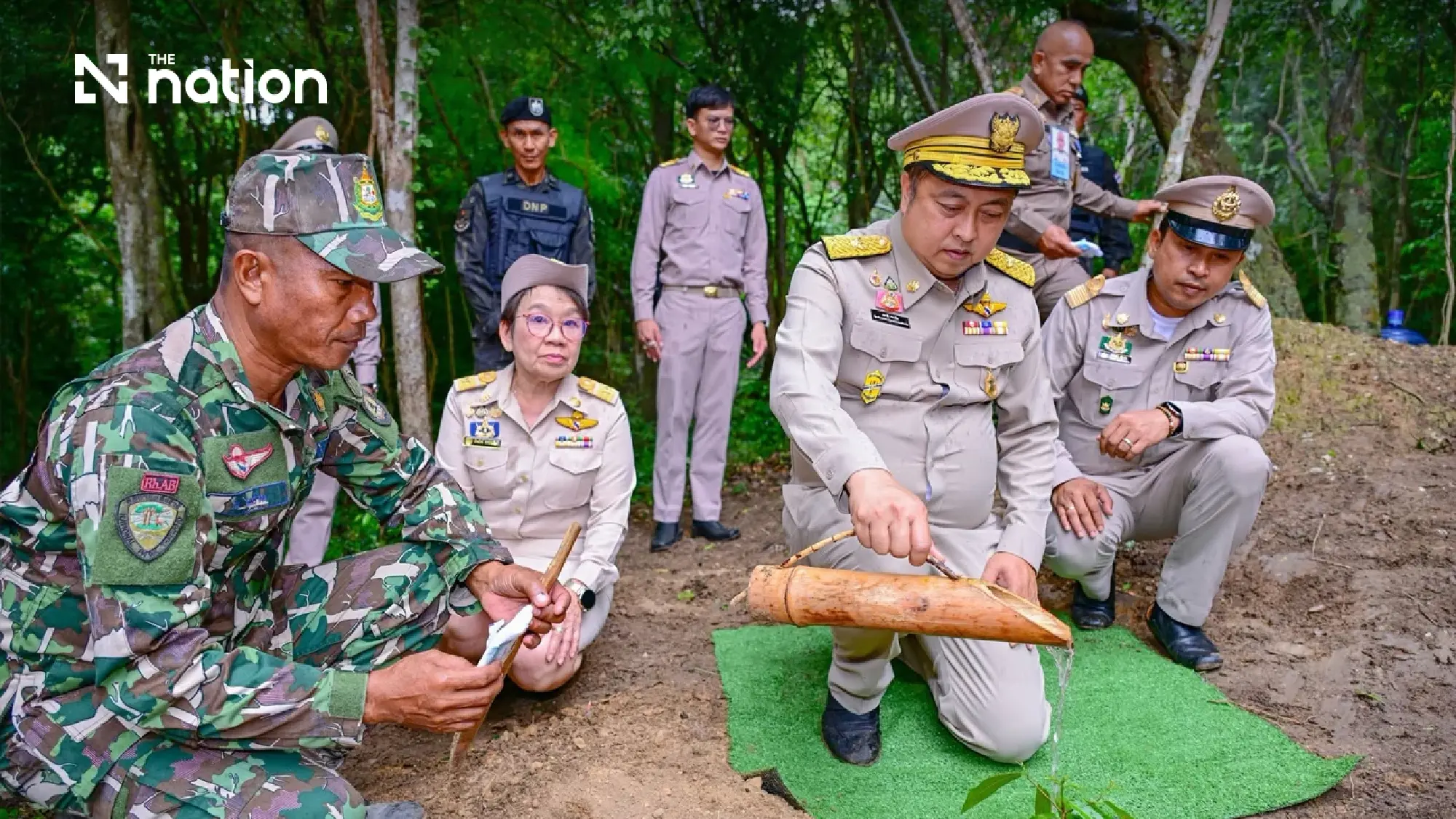
After the ceremony, officials and other participants planted 200 fragrant sandalwood saplings, replacing the harvested trees at a ratio of 10 saplings for every tree used.
The National Parks Department will maintain and monitor the replacement trees to support their survival and preserve the forest ecosystem.
Timber to be delivered to traditional artisans
Fragrant sandalwood, or Mansonia gagei, is a rare tree traditionally regarded as highly auspicious. Its use in royal ceremonies dates back to the Ayutthaya period, when the wood came to symbolise goodness and a peaceful passage after death.
National Parks Department officials will cut the harvested timber into sections and process it with volunteers before delivering it to the Office of Traditional Arts under the Fine Arts Department in Nakhon Pathom.
The Office of Traditional Arts will use the prepared wood for work connected with the Princess’s royal funeral rites.
