
US economic pressure could force Thailand to choose sides


US pressure on Iran raises oil and investment risks for Thailand, while closer scrutiny of China could force Bangkok into difficult policy choices
- The United States has opened three economic fronts simultaneously, using the scale of its economy to pressure three main targets: Iran, Canada and China.
- Washington has announced its “Economic D-Day” measures against Iran.
- The campaign aims to cut Iran’s financial lifelines and dismantle its sources of revenue through sanctions targeting five key sectors, while threatening penalties against its trading partners worldwide.
- The confrontation has extended to Canada, a US ally facing steep tariffs, and China, its strategic rival, which is also being considered for additional duties, although Washington is proceeding more cautiously.
- Thailand has been warned that it could face pressure to “choose sides” between the United States and China, a major trading partner, while contending with higher oil prices and investment volatility.
A widening US campaign to isolate Iran economically could expose Thailand to higher energy costs and unstable capital flows, while Washington’s scrutiny of Beijing may create a difficult foreign-policy choice for Bangkok, a CIMB Thai Bank economist has warned.
Amonthep Chawla, assistant managing director and head of research at CIMB Thai Bank, said Thailand had relatively little direct trade with Iran. The greater risk would emerge if the United States extended its measures to Iran’s partners, particularly China, one of Thailand’s most important trading partners.
Bangkok could then face pressure over whether to maintain normal commercial relations with Beijing despite possible US action, he said.
The economic effects could reach Thailand through two main channels. Measures against Iran could push up global oil prices, raising domestic production expenses and living costs, while a prolonged confrontation could weaken confidence in trade and investment and disrupt international capital flows.
Washington applies pressure on three fronts
US President Donald Trump is using the size of the American economy and its domestic market to exert pressure on Iran, Canada and China, although Washington’s policies towards the three countries are at different stages.
The strategy has shifted the emphasis from military action to economic pressure. Stephen Miller, a senior White House adviser and close Trump ally, has previously described the philosophy behind the approach by saying that the real world was “governed by the iron law of strength, force and power”.
Washington has moved towards a broader economic campaign against Iran after nearly six months of military confrontation failed to produce a settlement.
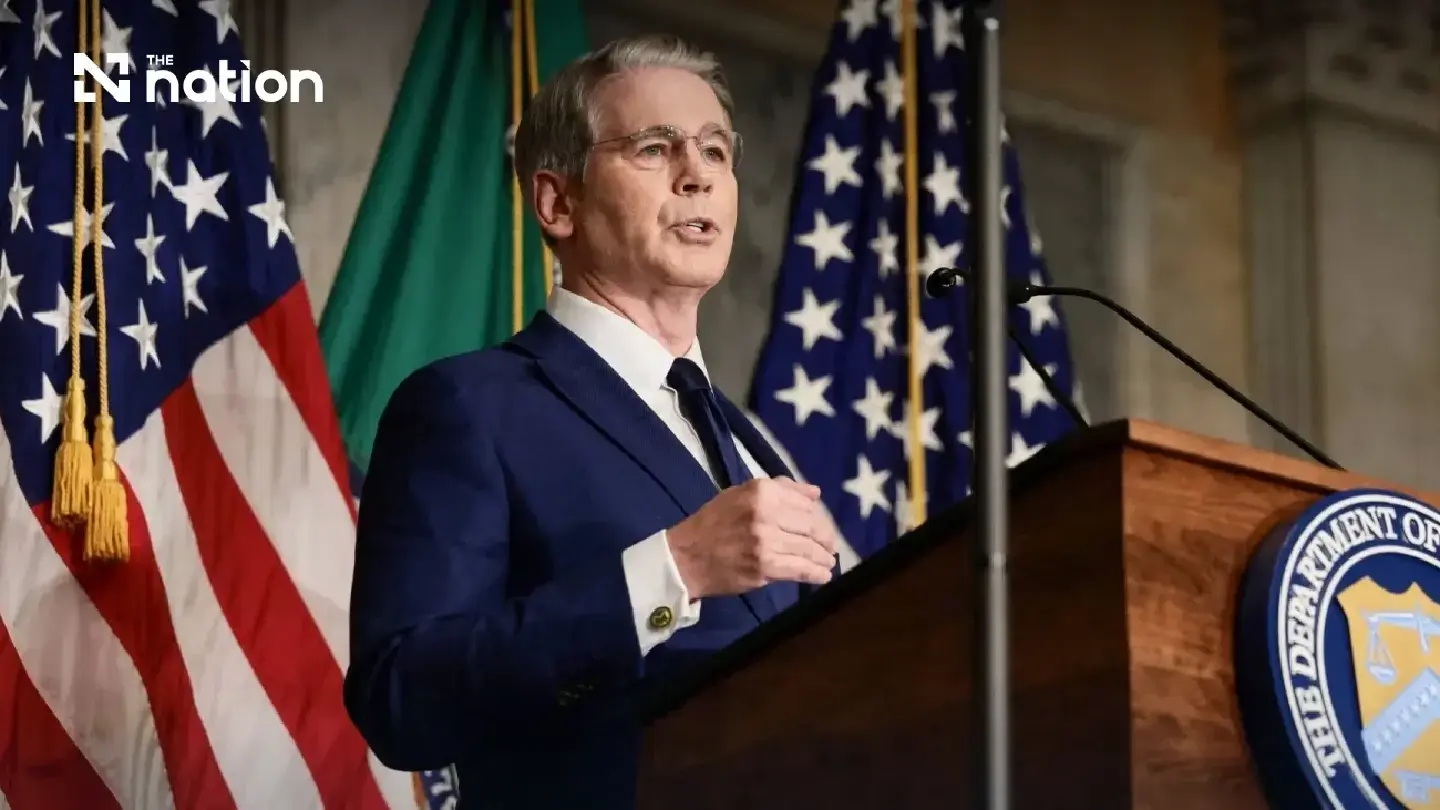
US Treasury Secretary Scott Bessent announced a new pressure campaign called “Operation Economic Outcast”, which he also described as “Economic D-Day”. It is intended to cut Iran’s revenue and threatens penalties against companies and financial institutions worldwide that continue doing business with Tehran.
Bessent presented Iran with two alternatives: complete economic isolation or a change in conduct that would allow the country to return to the global economy.
The measures identify five principal sectors—digital assets, technology, gold, aviation and maritime shipping—while the Treasury has restricted nearly 60 individuals, entities and vessels linked to Iran.
Washington is also targeting Iran’s oil and gas income and has called on other countries to sever economic ties with Tehran.
Iran rejects campaign as economic terrorism
Iran has refused to yield to the new pressure. Economy Minister Ali Madanizadeh told state television that Tehran had prepared a two-year plan to manage the situation.
“The government is prepared and has a two-year plan to manage these circumstances,” he said. “The enemy is trying to launch an act of economic terrorism against us, but we have tools of our own and know how to play this game.”
Iran’s strongest countermeasure has been its closure of the Strait of Hormuz, a route used for about one fifth of global oil and gas shipments.
The disruption has driven Brent crude to about US$92 per barrel, threatening Trump’s cost-of-living agenda and potentially affecting voter sentiment before the US midterm elections in November 2026.
US petrol prices have also risen sharply. Daily data from the American Automobile Association put the national average at US$4.09 per gallon, or 3.78 litres, compared with US$2.98 on February 28, when the United States and Israel began attacking Iran.
David Oxley, an economist at Capital Economics, said the immediate effect of the new sanctions could be limited because almost all Iranian oil exports went to China, which had repeatedly resisted US threats.
US government figures put China’s share at about 90% of Iran’s oil exports. Bilateral trade between Beijing and Tehran was valued at US$9.96 billion in 2025, excluding an estimated US$31.2 billion in unreported Iranian crude exports to China.
Dan Wang, China director at Eurasia Group, said Beijing might avoid retaliating directly against Washington. Chinese state banks and oil companies could nevertheless comply more quietly to avoid becoming sanctions targets themselves.
Canada retaliates while Washington proceeds cautiously on China
Economic pressure has also reached Canada after trade negotiations with the United States collapsed.
Washington imposed a 50% tariff on more than US$20 billion of Canadian goods, covering products ranging from ice hockey equipment and cement to agricultural products.
AP reported that Trump invoked Section 338, a provision not previously used to impose tariffs. In a social-media post, he accused Canada of taking advantage of the United States and seeking benefits as if it were an American state.
Trump also threatened to raise tariffs on Canadian cars and steel to 50% in 2027. Washington has sought restrictions on Canada’s ability to conclude free-trade agreements with third countries.
Canadian Prime Minister Mark Carney responded by announcing “dollar-for-dollar” retaliatory tariffs from September 8. The measures will target US steel, dairy products and electrical appliances.
The Trump administration has taken a more cautious approach towards China, its principal strategic rival.
Washington is considering an additional 7.5% tariff on Chinese goods under Section 301 over allegations of excess production capacity. If imposed, the measure would bring the total tariff rate introduced under Trump to 20%, consistent with a temporary trade truce before a planned summit between Trump and Chinese President Xi Jinping.
US Trade Representative Jamieson Greer said the inquiry into excess production capacity involved complex legal questions. Washington has appeared reluctant to undermine the atmosphere before the two leaders meet.
Analysts question pressure strategy
Trump and his advisers believe that America’s greater wealth and economic scale can force other countries to accept US terms. Their anticipated outcomes include a trade agreement weighted in Washington’s favour with Canada and sufficient economic disruption to bring down Iran’s government.
Analysts, however, identified three potential weaknesses in that calculation:
- Trump has previously retreated when overseas pressure has rebounded on the domestic economy through higher oil and food prices or volatility in the bond market.
- Sanctions require broad international co-operation, but confronting a close ally such as Canada could weaken the support Washington needs to isolate Iran in an increasingly multipolar system.
- Economic coercion could strengthen nationalist resistance in Canada and Iran rather than force either government to surrender.
Amonthep described Washington’s approach as economic warfare that was potentially more severe and complicated than conventional military conflict. He said its apparent objective was to drive Iranian inflation progressively higher until the domestic economy collapsed.
Questions remain over whether the proposed sanctions can be implemented legally and effectively because Iran’s commercial partners include China, Russia and India. Gaps in the global trading system could also limit their impact, while any disruption to energy supplies could rebound on the US economy.
“What is happening is an attempt by the United States to widen its economic war to countries aligned with Iran,” Amonthep said. “It resembles past sanctions on Russia, including financial sanctions and visa restrictions.”
The complexity of present-day trade made it necessary to determine whether the US measures represented an enforceable risk or a policy threat, he added. Thailand must meanwhile prepare for possible volatility in oil prices, investment conditions and capital flows.
Source: Bangkokbiznews
